If your garage gets unbearably hot during a Texas summer, you may be deciding between two very different solutions: a garage fan or a mini-split.
The short answer is that a garage fan is generally the better choice when your main goal is to remove trapped heat and improve airflow. A mini-split is better when you want to maintain a specific indoor temperature.
A garage ventilation fan exchanges hot garage air with outdoor air. A mini-split actively conditions the air inside the garage.
So, when comparing a garage fan vs. a mini-split, the better choice depends less on which system is more powerful and more on how you use your garage and what level of comfort you expect.
Garage Fan vs. Mini-Split: Quick Comparison
Feature | Garage Fan | Mini-Split |
Primary purpose | Ventilation and heat removal | Heating and cooling |
Cools below outdoor temperature | No | Yes |
Provides outdoor-air exchange | Yes, with adequate intake airflow | Standard systems generally do not |
Temperature control | Limited | Thermostat controlled |
Heating capability | No | Available with heat-pump systems |
Best suited for | Parking, storage and occasional garage use | Gyms, workshops and frequently occupied garages |
Humidity control | Depends on outdoor conditions | Can remove moisture while cooling |
Energy use | Generally lower than active air conditioning | Higher because it actively conditions the space |
System complexity | Typically simpler | More involved HVAC system |
The key difference is simple: a garage fan ventilates the space, while a mini-split conditions it.
What's the Difference Between a Garage Fan and a Mini-Split?
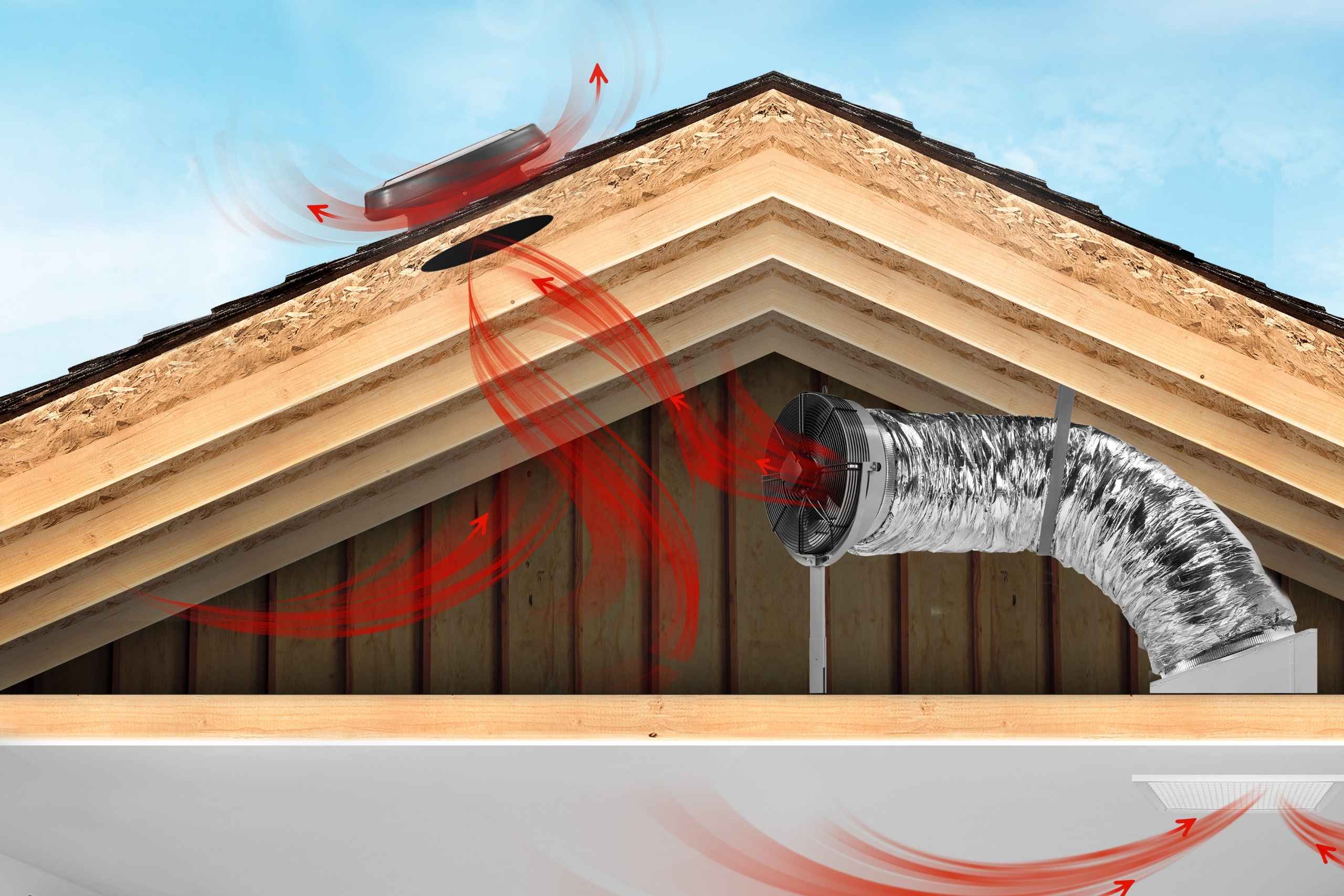
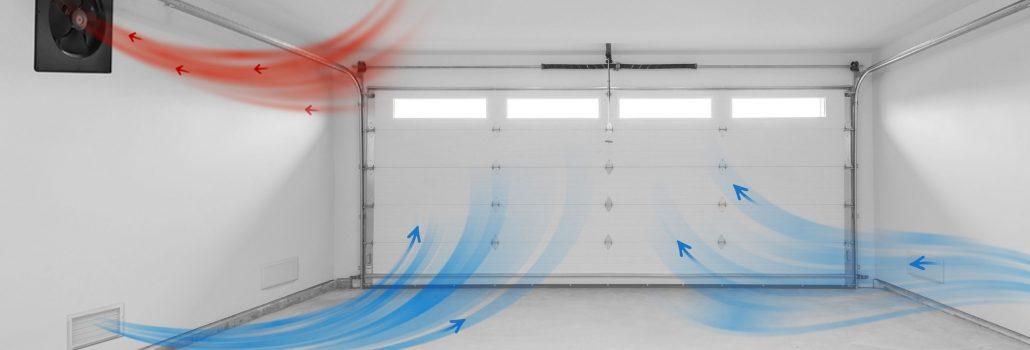
A garage ventilation fan removes hot, stagnant air from the garage and exhausts it outside. With an adequate intake path, outdoor air replaces the removed hot air.
This can be especially useful in Texas garages, where heat accumulates throughout the day and stays trapped inside the structure.
A garage fan does not provide air conditioning, however. If the outdoor air is hot, the replacement air entering the garage will be hot too. The goal is to remove accumulated heat and improve air exchange—not maintain the garage at a thermostat setting.
A garage mini-split works differently. It is a ductless heating and cooling system that actively transfers heat out of the space. When properly sized, it can maintain indoor temperatures below outdoor conditions and provide much more precise comfort control.
That leads to the most important question in this comparison:
Do you need better ventilation, or do you want the garage to function more like a conditioned room?
When Is a Garage Fan the Better Choice?
A garage fan often makes the most sense when you still use your garage primarily for parking, storage, or occasional projects.
Your Main Problem Is Trapped Heat
Garages can absorb heat throughout the day through the roof, garage door, and surrounding surfaces. Without enough air exchange, that heat can remain trapped inside long after outdoor conditions begin to change.
A garage exhaust fan lets that accumulated hot air leave the space.
If your main complaint is that the garage feels hotter and more stagnant than the air outside, ventilation may address the problem more directly than adding air conditioning.
You Mainly Use the Garage for Parking or Storage
Not every garage needs to match the temperature of a home’s living areas.
If you mainly enter the garage to park vehicles, retrieve equipment, work on occasional projects, or access storage, you may not need precise temperature control.
In those situations, professional garage fan installation can be a practical way to address heat buildup without turning the garage into a fully conditioned space.
You Want Outdoor-Air Exchange
Air exchange is one of the biggest functional differences between these systems.
A garage exhaust fan moves garage air outside while allowing replacement air to enter through an appropriate intake path.
A typical mini-split primarily heats or cools the air already inside the garage. It should not be considered a substitute for dedicated ventilation when the goal is outdoor-air exchange.
When Is a Mini-Split the Better Choice?
A mini-split is the stronger option when ventilation alone cannot provide the comfort you want.
You Want a Specific Temperature
This is often the easiest way to decide.
If your goal is:
“I want to remove some of the trapped heat from my garage,”
a garage fan may be sufficient.
If your goal is:
“I want my garage to stay at a comfortable thermostat setting even when it’s extremely hot outside,”
you are looking for active air conditioning.
A mini-split is designed for that job.
You Spend Several Hours at a Time in the Garage
How often and how long you use the garage should heavily influence the decision.
Someone who spends a few minutes at a time in the garage has very different comfort requirements from someone who uses the space for hours every day.
A mini-split may make more sense when the garage regularly functions as a:
- Home gym
- Workshop
- Hobby room
- Studio
- Regular work area
In these situations, thermostat-controlled cooling can provide comfort that ventilation alone cannot.
A mini-split also performs better as a climate-control solution when the garage is reasonably insulated and air-sealed. Otherwise, heat continually entering the space can make it harder to maintain the desired temperature.
You Want Heating as Well as Cooling
Many mini-splits use heat-pump technology, allowing the same system to provide both cooling and heating.
That may be useful for a garage used year-round.
A garage ventilation fan doesn’t provide heating, so homeowners who want year-round temperature control may find a mini-split better suited to their needs.
Can You Use a Garage Fan and Mini-Split Together?
Potentially, but the two systems should have clearly defined purposes.
Running a powerful garage exhaust fan while a mini-split is actively cooling can remove conditioned air and replace it with hot outdoor air. That can make the mini-split work harder.
A more practical setup may be to use ventilation to release accumulated heat when the garage is not being actively conditioned, then rely on the mini-split when the garage is occupied and temperature control is the priority.
Whether combining the systems makes sense depends on the garage layout, how you use the space, and why you need ventilation in the first place.
More equipment is not automatically better. Each system should solve a specific problem.
Garage Fan or Mini-Split: Which Should You Choose?
For most homeowners, the decision comes down to one distinction:
Choose a garage fan when your primary goal is ventilation and removing trapped heat. Consider a mini-split when your primary goal is maintaining a controlled indoor temperature in a garage that is occupied for extended periods.
If you use the garage mostly for vehicles, storage, and occasional projects, you may not need full air conditioning.
If the garage has effectively become another regularly occupied room, thermostat-controlled cooling may be worth considering.
Get Help Choosing a Garage Ventilation Solution
At The Guild Roofing & Gutters, we specialize in home ventilation solutions for homeowners throughout Austin, San Antonio, and the Texas Hill Country.
When evaluating a garage fan, we consider the garage’s size and layout, heat exposure, available intake airflow, and how you actually use the space. The goal is to recommend ventilation based on the garage itself—not assume every hot garage needs the same solution.
If you’re trying to determine whether a garage fan is the right fit for your home, contact The Guild Roofing & Gutters for a Free Estimate. We can evaluate your garage and help you understand the ventilation options available for your space.
Frequently Asked Questions
Can a garage fan work in a garage with no windows?
Yes. A garage does not need windows for a ventilation fan to work, but the system does need a planned path for hot air to leave and replacement air to enter. Depending on the garage, The Guild Roofing & Gutters can evaluate wall-mounted, ceiling-mounted, or ducted exhaust configurations along with intake options such as garage door vents.
Do I have to leave my garage door open for an exhaust fan to work?
Not necessarily. A garage exhaust fan needs adequate replacement air, but that airflow can come through properly designed intake vents rather than leaving the entire garage door open. The Guild Roofing & Gutters evaluates intake airflow as part of the system design and can incorporate garage door vents when they are appropriate for the property.
Can a garage fan help with heat in a room above or next to the garage?
Reducing excessive heat buildup in an attached garage may help reduce some of the heat transferred toward adjacent areas, but results depend on the home’s insulation, air sealing, construction, and HVAC system. We would not treat a garage fan as a guaranteed solution for a hot bedroom or living space; instead, we can evaluate whether garage ventilation is contributing to the larger heat problem.
Can The Guild Roofing & Gutters install a garage fan in a detached garage?
Yes. We can often install garage ventilation in both attached and detached garages. Detached structures may have different electrical, mounting, and intake-air considerations, so we evaluate the garage before recommending the appropriate configuration.
What if my garage does not have enough intake airflow for an exhaust fan?
An exhaust fan can only move air effectively if enough replacement air can enter the garage. If the existing garage does not provide an adequate intake path, we can evaluate options such as dedicated intake ventilation or garage door vents as part of the overall system rather than simply installing a larger fan.
Will The Guild Roofing & Gutters tell me if a garage fan is not the right solution?
Yes. We recommend garage ventilation based on the home, airflow conditions, and how you intend to use the space rather than taking a one-size-fits-all approach. If your main goal is to maintain a thermostat-controlled temperature below outdoor conditions, we will be clear about ventilation’s limitations so you can decide whether an air-conditioning solution is more appropriate.