Texas summer heat can turn a garage into one of the hottest spaces around your home. Direct sunlight heats the roof and garage door, vehicles bring additional heat inside, and many garages have limited insulation or airflow to help that heat escape.
The right solution is not always air conditioning. For many garages, the most effective approach is to reduce incoming heat, improve ventilation, and increase air movement based on how you use the space.
Here are practical ways to keep a garage cooler during a Texas summer—and how to decide which improvements will help most.
Why Do Garages Get So Hot in Texas?
Most garages are not designed to maintain the same temperature as the conditioned areas of a home. Several factors can make that especially noticeable during a Texas summer.
Direct Sunlight on the Garage Door
The garage door is one of the largest exterior surfaces on many homes. If it faces west or south, it can absorb hours of afternoon sunlight and radiate that heat into the garage.
An uninsulated metal garage door can become particularly warm under direct sun.
Heat From the Roof and Attic
A garage located beneath an attic or directly below a sun-exposed roof can also receive heat from above.
If ceiling insulation is limited, heat from the roof and attic can transfer downward and raise garage temperatures.
Limited Natural Ventilation
Many garages have few windows or exterior openings to create natural cross-ventilation.
Once hot air accumulates—particularly near the ceiling—it may remain trapped even after outdoor temperatures start to fall.
Hot Vehicles
A vehicle driven or parked in the Texas sun can add extra heat through its engine, body panels, tires, and interior.
Parking multiple vehicles inside an already warm garage can add even more heat to the space.
Understanding where the heat comes from matters because insulation, ventilation, circulation fans, and air conditioning each solve different problems.
What Is the Best Way to Keep a Garage Cool Without AC?
For most unconditioned garages, start by reducing heat gain, improving ventilation, and increasing air movement where people are.
Insulation and shade can slow heat from entering. Ventilation gives accumulated hot air a way to escape. Portable or ceiling fans can then improve comfort while you are actually using the garage.
Which step matters most depends on whether your garage is primarily gaining too much heat, trapping too much heat, or both.
1. Reduce the Amount of Heat Entering the Garage
Before removing heat, reduce how much enters the space.
Start with the surfaces receiving the most direct sunlight.
Consider Garage Door Insulation
Because the garage door covers such a large portion of the exterior wall, its thermal performance can significantly affect heat gain.
An insulated replacement door or insulation designed for a compatible existing garage door may help reduce heat transfer.
If you add insulation to an existing door, make sure the material does not interfere with the door’s weight, balance, springs, tracks, or operating hardware.
Reduce Solar Heat Through Windows
Garage windows receiving direct afternoon sunlight can also contribute to heat buildup.
Depending on the window, options such as blinds, shades, appropriate window films, or exterior shading may help reduce solar heat gain.
Add Exterior Shade Where Practical
Trees, awnings, covered driveways, and other forms of exterior shade can help reduce the amount of direct sunlight reaching the garage door and walls.
Stopping heat before it reaches the building envelope is generally more effective than trying to remove it after it enters the garage.
2. Check the Garage Ceiling and Insulation
If the garage door doesn’t seem to be the main source of heat, look up.
A garage directly below an attic space can receive substantial heat through the ceiling during hot afternoons. Adequate insulation can help slow that transfer.
Air sealing may also matter. Gaps around penetrations and other openings can allow unnecessary air and heat movement between the garage, attic, and adjacent areas.
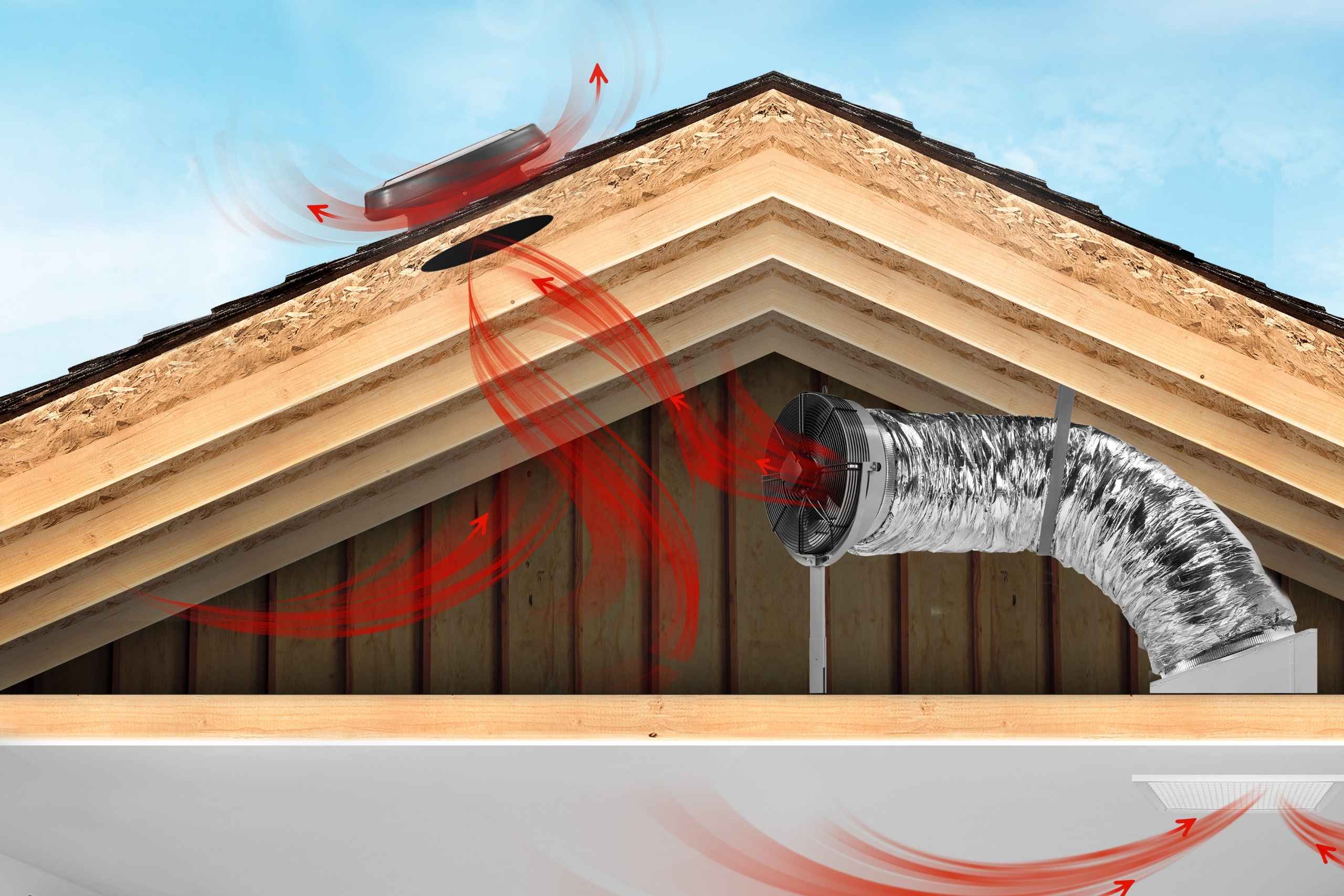
If excessive heat is accumulating in the attic itself, the attic ventilation system may need to be evaluated separately. The Guild Roofing & Gutters also installs solar attic ventilation systems for homes where attic airflow is part of the problem.
Attic ventilation and garage ventilation address different spaces, so it is important to determine where heat is accumulating before choosing a solution.
3. Improve Ventilation So Trapped Heat Can Escape
Reducing heat gain helps keep additional heat out. Ventilation addresses heat already inside.
When the garage is warmer than the outdoor air, exchanging trapped garage air for outside air can help reduce accumulated heat.
Use Natural Ventilation When Conditions Allow
Opening windows or exterior doors may create useful cross-ventilation when outdoor conditions are favorable.
This is generally most effective when the outdoor air is cooler than the garage, such as in the morning or later in the evening.
During the hottest part of a Texas afternoon, opening a large garage door can instead introduce more hot air and direct sunlight.
Consider Mechanical Garage Ventilation
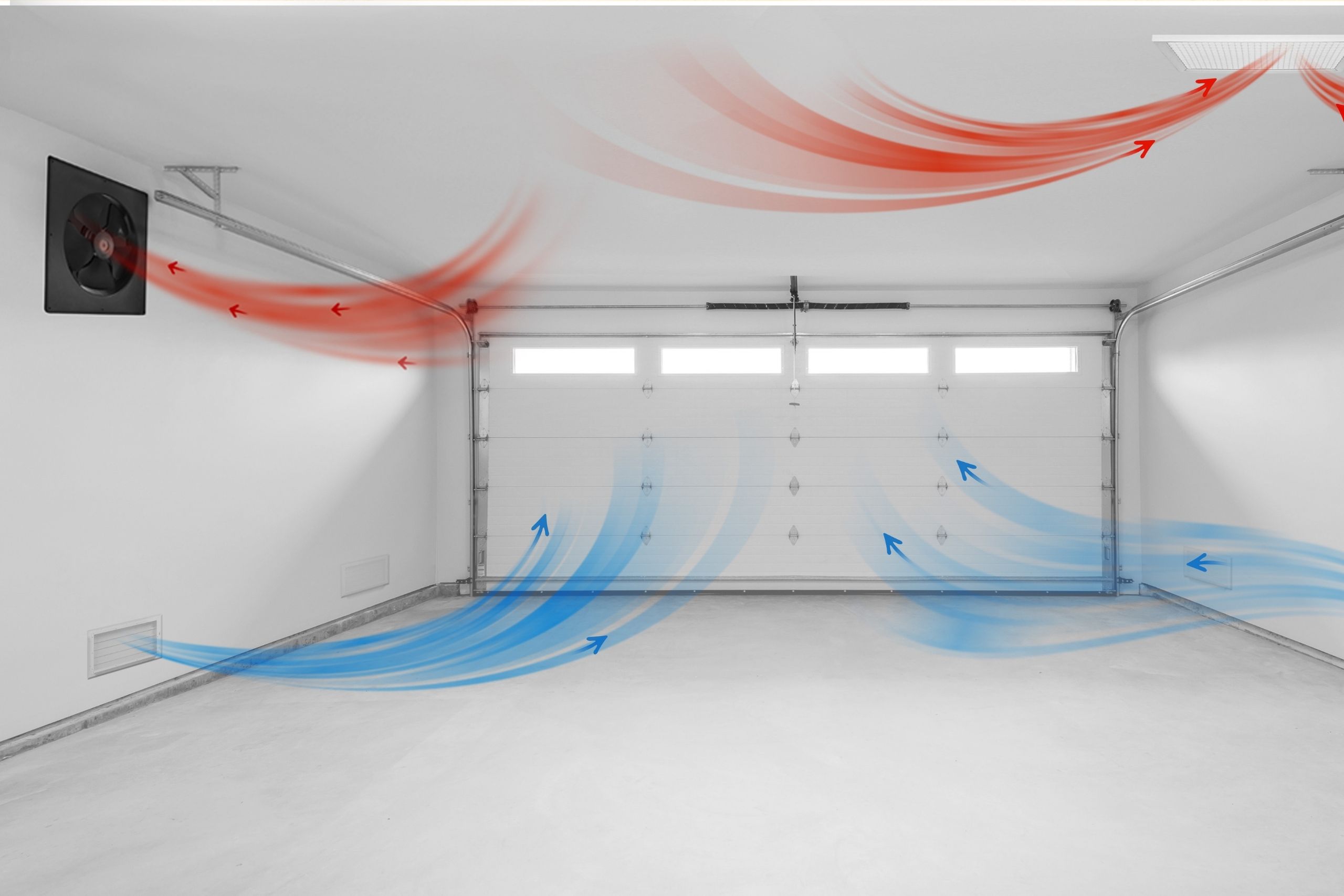
If a garage has limited natural airflow, mechanical ventilation can help exhaust accumulated hot air and allow replacement air to enter.
Choosing the appropriate fan matters, too. Our garage fan vs. exhaust fan guide explains what homeowners should consider when selecting a ventilation solution for their space.
For an attached garage, replacement air should come from outdoors rather than from the conditioned home, and the garage-to-house air barrier should remain sealed.
Unlike a portable fan, which mainly circulates air within the garage, an exhaust system creates actual air exchange.
Learn more about how garage ventilation systems are evaluated and installed.
4. Use Portable Fans for Personal Comfort
Circulation fans, including pedestal, box, and ceiling fans, can still be useful, particularly if you spend time working or exercising in the garage.
They increase air movement across your skin, which can make the space feel more comfortable.
They generally don’t remove heat that has already accumulated in a closed garage.
If the same hot air stays trapped inside, a circulation fan is just moving it around. That’s why portable or ceiling fans tend to work best after you address major heat gain or provide a way for hot air to escape.
5. Be Strategic About Opening the Garage Door
Opening the garage door can quickly exchange a large volume of air, but timing matters.
If the garage is hotter than the outdoor air, opening the door for a period during the cooler morning or evening can help release stored heat.
During the hottest part of the afternoon, however, leaving the garage door open may introduce:
- Hot outdoor air
- Direct sunlight
- Radiant heat from the driveway
- Humidity
- Dust and outdoor debris
Use the garage door as a ventilation tool when outdoor conditions are more favorable than indoor conditions.
6. Allow Hot Vehicles to Release Heat
A recently driven vehicle can add extra heat to an already warm garage.
When practical, let the vehicle cool outside briefly before bringing it inside to reduce the heat it adds.
This can be particularly helpful with multiple vehicles or garages that already have limited ventilation.
7. Choose a Cooling Strategy Based on How You Use the Garage
The right approach also depends on what you expect from the space.
For Parking and Storage
If you mainly use the garage for vehicles and general storage, the goal may simply be to reduce extreme heat buildup.
Start with:
- Garage door insulation
- Ceiling insulation where needed
- Exterior shade
- Air sealing
- Improved ventilation
Full air conditioning may not be necessary.
Keep in mind that even an improved unconditioned garage can still become hot. Keep products that require strict temperature-controlled storage inside a conditioned area of the home.
For a Workshop or Hobby Space
If you regularly work in the garage, address the heat source first.
Reducing solar heat gain and improving ventilation can make circulation fans more useful because the space can release accumulated heat more effectively.
A ceiling or portable fan can then provide additional airflow around your work area.
For a Garage Gym
Exercise adds additional body heat to an already warm environment.
Ventilation can help remove accumulated hot air, while circulation fans can improve airflow around the exercise area.
If you need to maintain the garage near a specific temperature for extended periods, however, ventilation alone may not provide enough control.
For a Garage With No Windows
A garage does not need windows to have effective airflow.
Mechanical exhaust ventilation can provide a path for hot air to leave as long as the system also has an appropriate source of replacement air.
Simply placing several portable fans inside a sealed garage will not create the same air exchange.
For a Garage With a Room Above It
If an upstairs bedroom or living area also becomes uncomfortable, the problem may involve more than the garage itself.
Possible contributors can include:
- Garage ceiling insulation
- Attic insulation
- Air sealing
- Ductwork
- Roof heat
- HVAC balance
- Heat transfer through shared surfaces
Cooling the garage may help, but you should also evaluate comfort issues in the room above as part of the home’s conditioned space.
8. Know When Air Conditioning Makes Sense
Ventilation and air conditioning solve different problems.
Ventilation exchanges indoor and outdoor air, while air conditioning actively removes heat and provides greater temperature control.
If you regularly use the garage as a workshop, gym, studio, or hobby space and need to keep it near a specific temperature, mechanical cooling may be more appropriate than ventilation alone.
Before conditioning the garage, address major sources of heat gain such as poor insulation, direct solar exposure, and air leakage. Otherwise, the cooling system must continually compensate for heat entering the space.
If you’re considering mechanical cooling, our garage fan vs. mini-split comparison explains which option makes more sense based on how you use your garage.
Want a quick comparison of the major options? Watch our garage fan vs. insulation vs. mini-split video.
Need Help With a Hot, Poorly Ventilated Garage?
No single solution works for every Texas garage.
Some garages benefit most from reducing heat gain through the door, ceiling, or windows. Others already have reasonable insulation but lack an effective way to vent accumulated hot air.
If poor airflow appears to be part of the problem, The Guild Roofing & Gutters can evaluate your garage size, configuration, intake airflow, electrical requirements, and installation conditions to determine whether garage ventilation makes sense for your home.
Explore our garage fan installation services or contact The Guild Roofing & Gutters to schedule an evaluation.
Frequently Asked Questions
Can you use a portable air conditioner in a garage without windows?
Yes, but a portable AC still needs a safe way to exhaust hot air outdoors. In a windowless garage, that may require a properly designed wall or door vent, and the unit should be sized appropriately for the space.
Will a dehumidifier help cool a hot garage?
A dehumidifier can make humid air feel more comfortable, but it does not actually cool the garage. In fact, it may add a small amount of heat while running, so it works best as a moisture-control tool rather than a primary cooling solution.
How much does it cost to cool a garage?
The cost depends on what the garage actually needs. Shade, insulation, ventilation, and mechanical cooling all involve different levels of work, so it is best to identify the source of the heat before comparing options or requesting an estimate.
Can The Guild Roofing & Gutters help determine whether garage ventilation is right for my home?
Yes. The Guild Roofing & Gutters evaluates factors such as garage size, airflow, heat buildup, available intake air, electrical requirements, and installation conditions before recommending a ventilation solution.
Does The Guild Roofing & Gutters install Solatube garage fans?
Yes. The Guild Roofing & Gutters supplies and installs Solatube garage ventilation solutions and recommends the setup based on the garage’s size, airflow needs, and existing conditions rather than using a one-size-fits-all approach.
What happens when I request a garage ventilation estimate?
The Guild Roofing & Gutters starts by assessing the garage, including its size, airflow concerns, heat load, and installation conditions. From there, the team recommends an appropriate ventilation approach and provides an estimate based on the specific project.