If your attic becomes intensely hot during a Texas summer, powered ventilation may help move trapped heat out of the space. The bigger question is whether a solar attic fan or an electric attic fan makes more sense for your home.
Both options exhaust hot attic air, but they differ in how they are powered, when they operate, and what installation may require. Solar attic fans use sunlight to power the motor, while electric attic fans rely on household electricity.
Neither option is automatically better for every home. Roof exposure, intake ventilation, attic air sealing, insulation, shading, and the reason your attic is overheating can all affect performance.
A more powerful fan is not necessarily a better solution, either. Effective attic ventilation depends on the overall airflow system, including how replacement air enters the attic as warm air is exhausted.
Understanding the differences between solar and electric attic fans can help you choose an option that fits your roof and attic conditions, rather than simply adding more ventilation equipment.
Solar Attic Fan vs. Electric Attic Fan: What Is the Difference?
The main difference between a solar and electric attic fan is the power source.
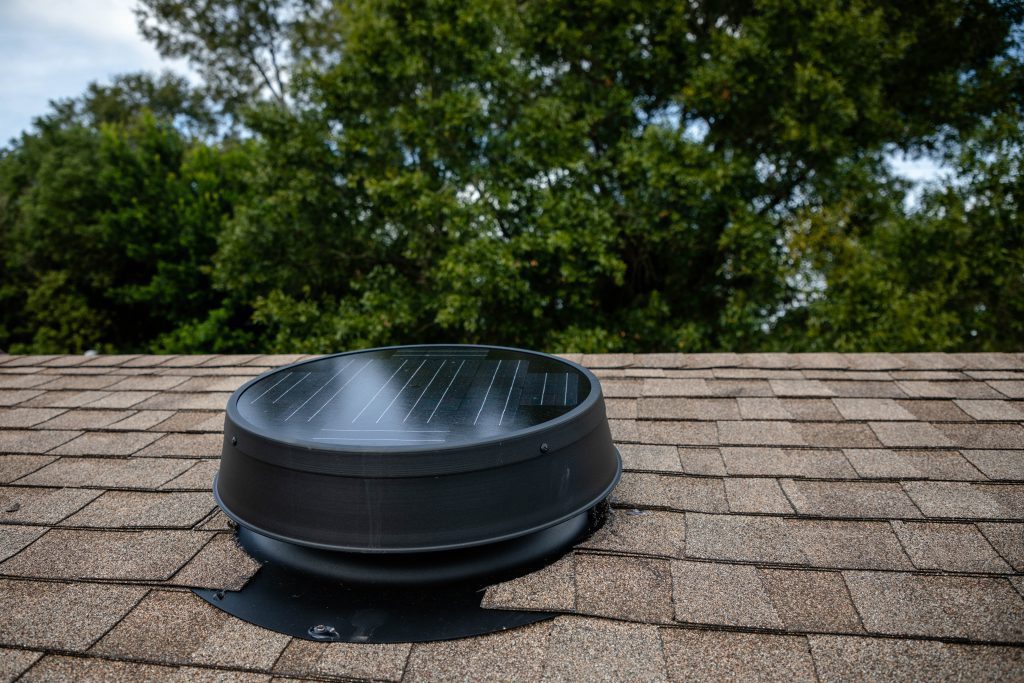
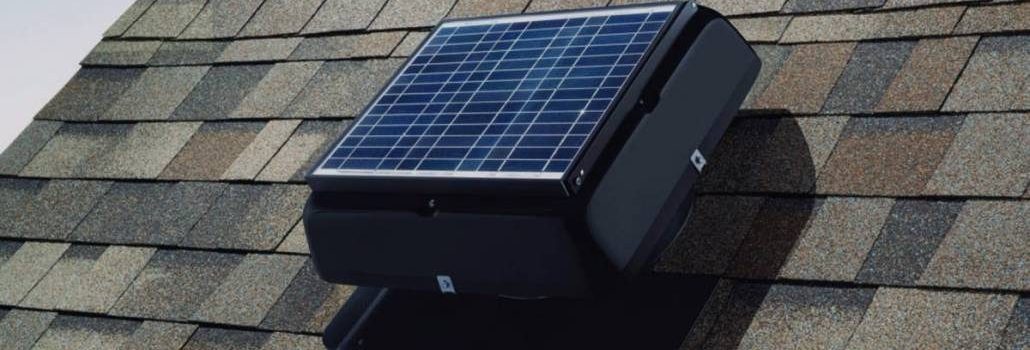
A solar attic fan uses a roof-mounted solar panel to power the fan motor. An electric attic fan connects to the home’s electrical system and can operate whenever its controls call for ventilation.
Factor | Solar Attic Fan | Electric Attic Fan |
Power source | Solar energy | Household electricity |
Grid electricity use | Typically none during standard solar operation | Uses household electricity when running |
Daytime operation | Yes, with sufficient sunlight | Yes |
Night operation | Typically no | Yes, when controls activate |
Electrical wiring | Usually not required for standard solar-only models | Required |
Airflow consistency | Varies with available sunlight | More consistent |
Best fit | Daytime heat removal with good solar exposure | Controlled operation independent of sunlight |
Solar-powered ventilation has a natural advantage during hot, sunny conditions because peak solar availability often overlaps with the hours when attic heat is building most rapidly.
Electric models provide more consistent powered operation because they do not depend on sunlight. They may make more sense when roof shading limits solar production, ventilation is needed after sunset, or operation needs to follow thermostat or other control settings.
For more detail about solar fan operation under different conditions, see The Guild Roofing & Gutters solar attic fan performance and operation guide.
Does a Solar Attic Fan Work as Well as an Electric Attic Fan?
A properly selected solar attic fan can provide effective daytime ventilation, while an electric attic fan offers more consistent powered operation regardless of sunlight.
However, fan performance depends on more than the power source or CFM.
CFM, or cubic feet per minute, measures airflow, but choosing the highest-CFM fan does not automatically create better attic ventilation.
When an exhaust fan removes air from an attic, replacement air has to enter somewhere. Ideally, that replacement air comes through properly sized soffit vents or other dedicated intake ventilation.
If the attic does not have enough intake airflow, the fan may create negative pressure and pull air through leaks between the living space and attic instead. That can work against the goal of improving comfort or efficiency.
Before increasing fan capacity, attic conditions should be evaluated for:
- open and unobstructed soffit vents;
- adequate intake ventilation;
- insulation that does not block airflow at the eaves;
- reasonable air sealing between the living space and attic;
- an intake and exhaust configuration that supports balanced airflow; and
- sufficient roof exposure if you’re considering a solar-powered fan.
Homeowners already experiencing excessive attic heat or poor airflow can also review the signs of failing attic ventilation before deciding whether additional powered ventilation is appropriate.
Which Costs Less to Operate: a Solar or Electric Attic Fan?
Solar attic fans generally have lower grid operating costs because they run on solar power and don’t draw electricity from the home.
Electric attic fans consume household electricity whenever they run.
Operating cost is only one part of the comparison, however.
An electric attic fan normally requires a connection to the home’s electrical system and may require additional electrical work, depending on the equipment and installation location. A standalone solar attic fan usually avoids that requirement because its solar panel supplies the energy needed to operate the motor.
The overall value of either option may also depend on:
- fan capacity;
- motor and equipment quality;
- controls;
- materials;
- roof access;
- warranty coverage; and
- installation requirements.
Homeowners should also be cautious about claims that a powered attic fan will automatically reduce cooling bills by a specific percentage. Actual results depend on multiple parts of the home, including insulation, attic air leakage, HVAC efficiency, ductwork, weather conditions, and the existing ventilation system.
The better value is the option that addresses the home’s actual airflow needs without adding unnecessary energy use or equipment.
Which Is Better for Texas Homes: Solar or Electric Attic Fans?
For many Texas homes with good roof exposure and significant daytime attic heat, a solar attic fan can be a practical ventilation option.
Austin, San Antonio, and communities throughout the Texas Hill Country experience long periods of strong sun during hot weather. That means available solar energy often overlaps with the hours when roof surfaces and attic spaces heat up fastest.
A Solar Attic Fan May Make More Sense When:
- The roof receives dependable sunlight;
- daytime attic heat is the primary concern;
- minimizing additional household electricity use is a priority; and
- the attic already has adequate intake airflow.
An Electric Attic Fan May Make More Sense When:
- Trees, nearby structures, or roof orientation create heavy shading;
- powered ventilation is needed after sunset; or
- consistent operation regardless of sunlight is important.
Climate alone should not determine the decision. Also consider intake ventilation, attic air sealing, insulation, and the existing roof-ventilation configuration before adding powered exhaust.
An uncomfortable second floor doesn’t automatically mean the attic needs a stronger fan. Insulation gaps, duct leakage, HVAC balancing, window exposure, and other building-envelope conditions can also contribute to upstairs heat.
For Texas homeowners, the better question is not simply whether solar is better than electric. It is which ventilation approach best fits the roof, attic airflow, and underlying source of the problem.
Find the Right Attic Fan for Your Home
Choosing between solar and electric attic ventilation starts with understanding how air currently moves through your attic.
We can evaluate roof exposure, intake ventilation, and existing attic conditions to determine whether professional solar attic fan installation is right for your home.
The Guild Roofing & Gutters provides expert roofing, gutter, skylight, and ventilation services for residential and commercial properties throughout Austin, San Antonio, and the Texas Hill Country. Rooted in generations of craftsmanship, our team of master tradesmen delivers trusted, hands-on solutions that honor tradition while protecting and enhancing the homes and spaces our customers value most.
Request a Free Estimate from The Guild Roofing & Gutters to discuss your attic ventilation needs and determine the right next step for your property.
Frequently Asked Questions
Do solar attic fans work on cloudy days?
Solar attic fans may continue operating on cloudy days when their panels receive enough solar energy, but fan output can decrease as available sunlight drops. Actual performance depends on the solar panel, fan design, cloud cover, shading, and installation location.
Can an attic fan make your house hotter?
In some situations, a powered attic fan can increase cooling demand if it pulls conditioned air from the living space into the attic through ceiling leaks. Before adding powered exhaust ventilation, ensure adequate intake ventilation and good air sealing between the living space and attic.
Do electric attic fans use a lot of electricity?
Electricity use depends on the fan’s motor, wattage, controls, and run time. Unlike a standard solar attic fan, an electric model draws household power whenever it runs, so longer operating periods generally use more electricity.
Can The Guild Roofing & Gutters help me determine if a solar attic fan is right for my home?
Yes. We can evaluate your roof exposure, existing attic ventilation, intake airflow, and other attic conditions to determine whether a solar attic fan is an appropriate solution for your home. Our goal is to recommend ventilation that fits the property, not simply add a higher-powered fan.
How do I get an estimate for solar attic fan installation?
You can request a free estimate from The Guild Roofing & Gutters. Our team can review your home’s ventilation needs, roof conditions, and installation requirements before recommending the appropriate next step.
Where does The Guild Roofing & Gutters provide solar attic fan installation?
The Guild Roofing & Gutters provides solar attic fan and ventilation services for homeowners throughout Austin, San Antonio, and the Texas Hill Country. Our team of master tradesmen takes a hands-on approach to evaluating and installing solutions suited to each property.