If your garage gets hot or stagnant, adding a fan may seem like a simple solution. But once you start comparing options, terms such as garage fan, garage ventilation fan, ceiling fan, and exhaust fan can make the choice less clear.
So, what is the difference between a garage fan and an exhaust fan?
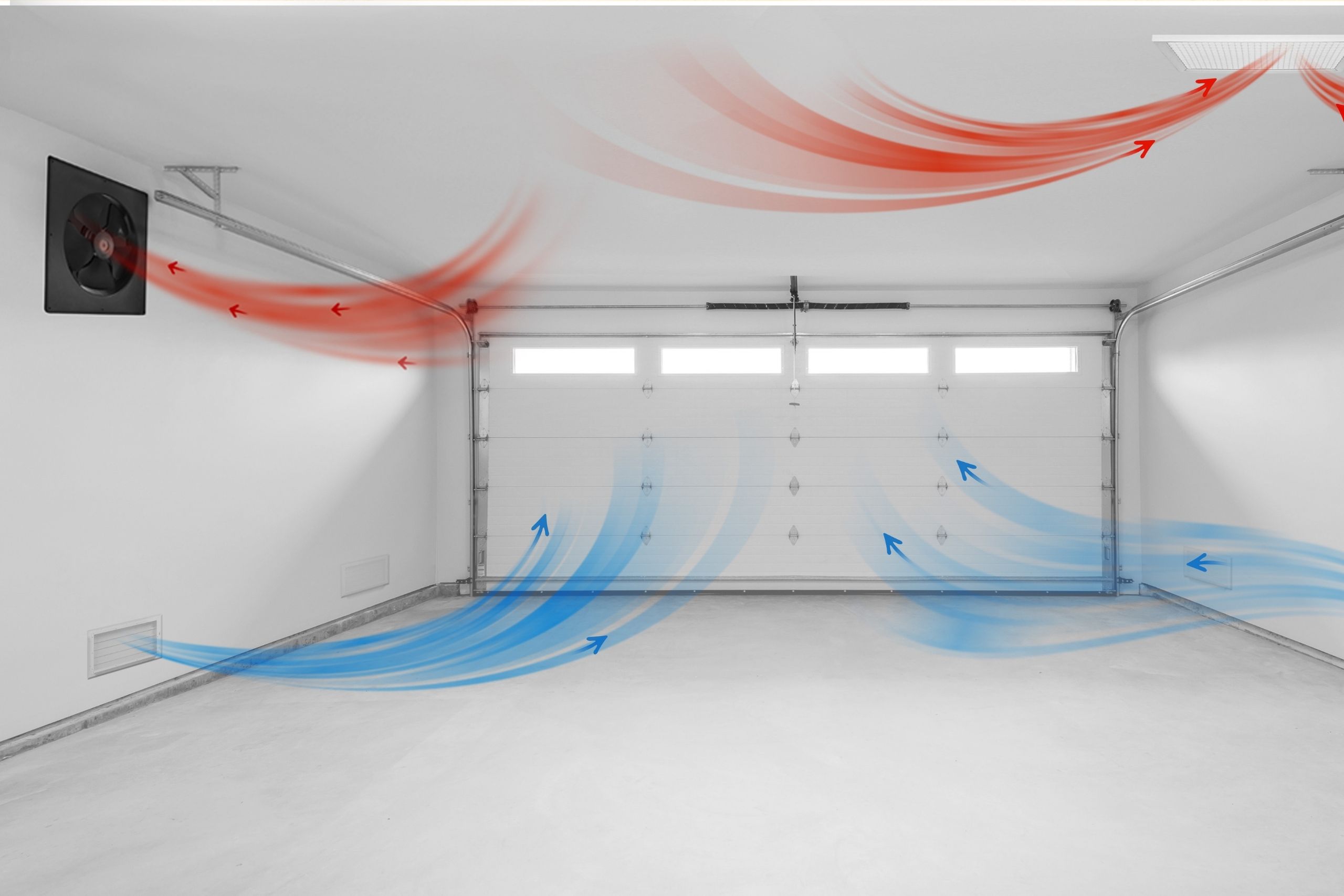
A garage fan is a broad term for a fan used in a garage, while an exhaust fan specifically removes air from the garage and sends it outside. A portable, ceiling, or wall-mounted circulation fan usually moves the air already inside the space. A garage exhaust fan creates active ventilation by moving indoor air outdoors and allowing replacement air to enter.
Garage Fan vs. Exhaust Fan at a Glance
Feature | Circulation-Style Garage Fan | Garage Exhaust Fan |
Primary function | Moves air around the garage | Moves garage air outdoors |
Common examples | Portable, pedestal, ceiling, or wall-mounted fan | Permanently installed ventilation or exhaust fan |
Creates a noticeable breeze | Yes | Not necessarily |
Removes trapped hot air | Not by itself | Yes, when conditions allow |
Exchanges indoor and outdoor air | No | Yes |
Helps ventilate stale air | Limited | Yes |
Permanent installation required | Usually no | Usually yes |
Best suited for | Localized air movement | Whole-garage ventilation |
The easiest way to remember the difference is:
A circulation fan moves air around. An exhaust fan moves air out.
What Does a Regular Garage Fan Do?
When homeowners say “regular garage fan,” they may mean a portable box fan, pedestal fan, wall-mounted fan, or ceiling fan.
These types of fans primarily circulate air within the garage.
If you are working at a bench, exercising, or spending time on a project, moving air across your body can make the immediate area feel more comfortable. A circulation fan can therefore be useful when your main goal is creating airflow around the part of the garage you are using.
It does not necessarily ventilate the space.
If the garage is closed, a circulation fan may keep moving the same warm air around instead of giving trapped air a way to leave.
A circulation-style fan may make sense when:
- You mainly want a breeze around a workstation or exercise area.
- Your garage door is often open while you use the space.
- You want a portable or temporary option.
- Whole-garage ventilation is not your primary concern.
For those situations, increased air movement may be enough.
What Makes a Garage Exhaust Fan Different?
A garage exhaust fan is designed around air exchange rather than circulation.
Instead of moving the same air around the room, it pulls air from inside the garage and exhausts it outdoors. Replacement air then enters through available or purpose-designed openings. The US Environmental Protection Agency requires these fans to operate continuously or automatically and vent directly outdoors.
That makes an exhaust fan especially useful when hot or stagnant air remains trapped in a closed garage.
You may also see this type of system called a garage ventilation fan. Both terms commonly describe fans that actively move garage air outside rather than simply recirculating it indoors.
An exhaust fan may make more sense when:
- Hot air tends to remain trapped in the garage.
- The space has limited natural airflow.
- The garage often feels stuffy or stagnant.
- You regularly use the garage as a workshop, hobby space, or home gym.
- Your goal is whole-garage air exchange, not airflow in one specific area.
A garage exhaust fan can also help remove accumulated heat when the air inside the garage is hotter than the replacement air coming in. However, it does not produce refrigerated air or maintain a thermostat-controlled temperature like an air-conditioning system.
For a deeper explanation of that distinction, see how garage fans help cool a hot garage.
Garage Ceiling Fan vs. Exhaust Fan
A garage ceiling fan and an exhaust fan may both be permanently installed, but they perform different jobs.
A garage ceiling fan generally circulates the air already inside the space. That can provide noticeable airflow around workbenches, exercise areas, or other parts of the garage where people spend time.
A garage exhaust fan moves indoor air outside, providing ventilation rather than simply recirculating it.
The two can also complement each other. A garage may use exhaust ventilation to exchange trapped indoor air while a ceiling or portable fan provides additional localized airflow.
What Does The Guild Roofing & Gutters Mean by a “Garage Fan”?
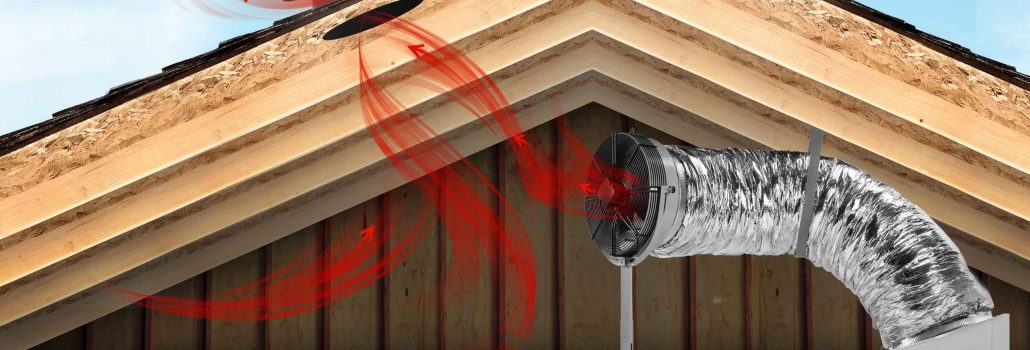
At The Guild Roofing & Gutters, when we refer to professionally installed garage fans, we generally mean garage ventilation systems designed to exhaust trapped air outdoors, not portable fans that simply circulate air inside the garage.
We install Solatube garage ventilation solutions for Texas homeowners who want a permanent approach to improving garage airflow.
If you are considering a professionally installed system, our garage fan installation services explain more about the solutions we offer and what goes into planning an installation.
Which Type of Garage Fan Should You Choose?
The right choice depends on the problem you want to solve.
Choose a Circulation Fan for Localized Air Movement
A portable, pedestal, wall-mounted, or ceiling fan may be enough if you mainly want a breeze while working, exercising, or spending time in one part of the garage.
This type of fan is particularly useful when the garage is already open or otherwise has natural airflow.
Consider an Exhaust Fan for Whole-Garage Ventilation
A garage exhaust or ventilation fan may be more appropriate when your main concern is hot or stagnant air remaining trapped throughout the space.
Instead of circulating that air, the system gives it a path to leave the garage.
Consider Both When You Want Ventilation and a Breeze
Circulation and exhaust ventilation solve different problems, so they don’t always have to compete.
A garage may benefit from active ventilation for the overall space while also using a circulation fan where you want stronger localized airflow.
No matter what ventilation system you install, never run a vehicle in a closed garage. A residential garage fan should not replace safe vehicle operation or carbon monoxide precautions.
Garage Fan or Exhaust Fan? Focus on the Function
The difference between a garage fan and an exhaust fan ultimately comes down to where the air goes.
A conventional portable, ceiling, or wall-mounted garage fan primarily circulates existing air. An exhaust fan removes garage air and moves it outdoors.
Because the term garage fan can refer to either type, understanding the fan’s function is more useful than relying on the product name alone.
If trapped heat or stagnant air is the problem, we can evaluate your garage and help determine whether a professionally installed ventilation system makes sense for your home.
The Guild Roofing & Gutters provides garage ventilation solutions for homeowners throughout Austin, San Antonio, Boerne, and surrounding Texas Hill Country communities.
Contact The Guild Roofing & Gutters to request a free estimate for professional garage fan installation.
Frequently Asked Questions
Is it worth putting an exhaust fan in the garage?
A garage exhaust fan can be worthwhile when the main problem is trapped hot or stagnant air rather than simply needing a breeze in one area. Because it moves garage air outdoors instead of just circulating it, an exhaust system provides a different type of airflow than a portable or ceiling fan.
What is the best way to ventilate a garage?
The right approach depends on the garage’s size, configuration, available airflow, and how you use the space. For garages where air regularly becomes trapped or stagnant, a properly planned exhaust or garage ventilation system can provide active air exchange rather than relying only on circulation fans or an open garage door.
Can The Guild Roofing & Gutters help determine what type of garage ventilation I need?
Yes. We can evaluate your garage’s size, layout, existing airflow, ceiling configuration, electrical access, and how you use the space before recommending a ventilation solution.
What type of garage ventilation systems does The Guild Roofing & Gutters install?
We install Solatube garage ventilation solutions designed for different garage configurations. We can help determine the best setup based on your garage and the ventilation problem you are trying to solve.
Can a garage ventilation system be installed in a garage with a finished ceiling?
In many cases, yes, but the right approach depends on what is above the garage and how the system can be routed to exhaust outdoors. We evaluate the existing ceiling and attic configuration before recommending an installation approach.
How do I get an estimate for garage fan installation?
Contact The Guild Roofing & Gutters to request a free estimate. We can review your garage, discuss the airflow or heat issue you are experiencing, and recommend an appropriate garage ventilation solution.