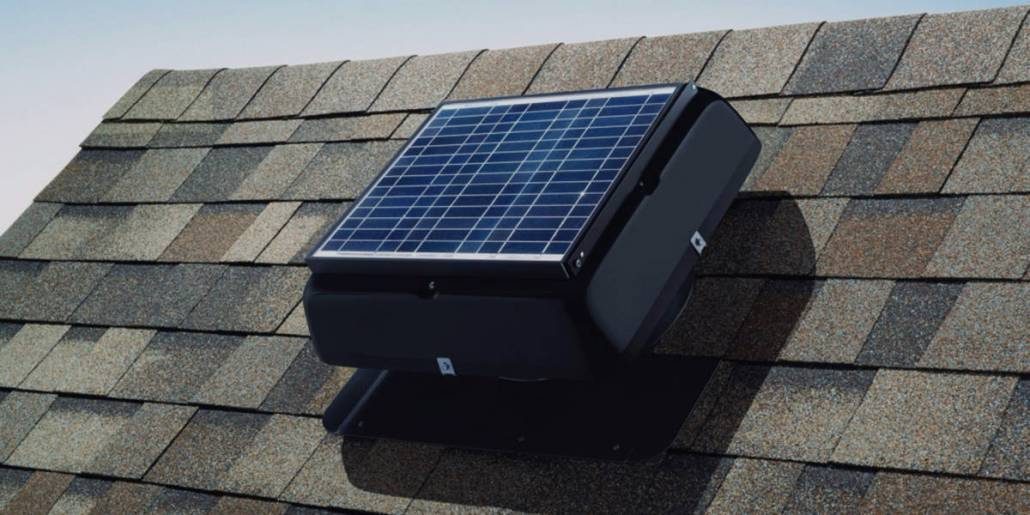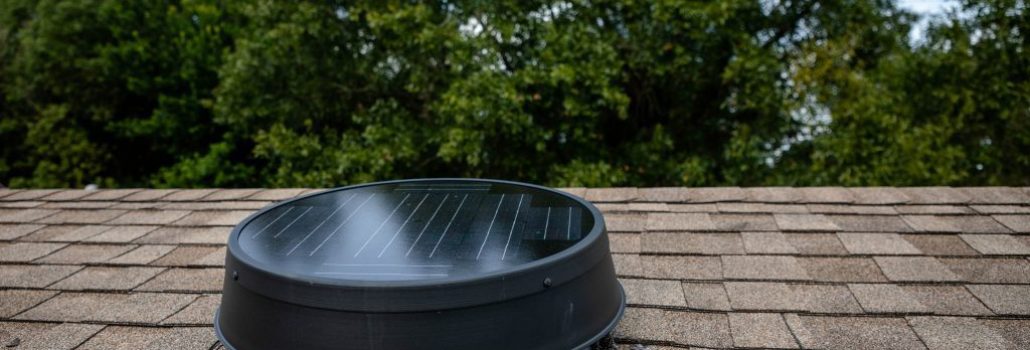
When homeowners compare a solar attic fan vs. ridge vent, the biggest difference is how each system moves air. A ridge vent relies on passive airflow to let warm attic air escape through the roof peak.
A solar attic fan actively exhausts attic air when sufficient solar energy is available to power the fan.
For homeowners dealing with excessive attic heat, uncomfortable upper floors, or poor airflow, choosing between a solar attic fan and a ridge vent isn’t simply about which one moves more air.
Roof design, soffit intake, insulation, air sealing, ductwork, and existing vents all affect how well an attic ventilation system performs. In some homes, a properly balanced ridge-and-soffit system may be sufficient. In others, active ventilation may be appropriate.
Understanding how these two approaches differ can help you avoid adding ventilation that does not address the actual problem.
Solar Attic Fan vs. Ridge Vent at a Glance
Factor | Solar Attic Fan | Ridge Vent |
Ventilation type | Active | Passive |
How it works | Mechanically exhausts attic air | Allows warm attic air to escape naturally |
Power source | Solar energy | None |
Intake ventilation needed | Yes | Yes |
Moving parts | Yes | No |
Operation | Runs when sufficient solar energy is available | Works continuously when natural airflow conditions support it |
Roof considerations | Depends on placement, solar exposure, and attic layout | Requires enough usable ridge length and balanced intake |
Maintenance | Fan and solar components may eventually require inspection | Minimal because there are no moving parts |
Neither system is automatically better. The right choice depends on how air enters, moves through, and exits the attic.
How Does a Solar Attic Fan Differ From a Ridge Vent?
The fundamental difference is active versus passive attic ventilation.
A ridge vent runs along the upper portion of a roof and lets warm attic air escape. Cooler outdoor air typically enters through intake vents near the soffits or eaves, helping create an airflow path from the lower portion of the roof toward the ridge.
Because there is no motor, ridge ventilation depends on natural forces such as wind pressure and temperature differences.
A solar-powered attic fan works differently. A photovoltaic panel powers a mechanical fan that actively pulls air out of the attic. Replacement air then enters through available intake vents.
That means a solar attic fan can provide more targeted exhaust during sunny periods, when roof temperatures are often at their highest.
A ridge vent, meanwhile, provides passive ventilation without electrical or mechanical components when the roof configuration and intake ventilation support it.
Both systems depend on adequate replacement air. Adding more exhaust without sufficient intake can reduce ventilation effectiveness and may create unintended airflow paths.
For a broader explanation of how solar-powered ventilation works, see The Guild Roofing & Gutters solar attic fan guide.
Which Works Better for a Hot Attic?
A powered attic fan may seem like the obvious solution for an extremely hot attic, particularly during a Texas summer. But attic temperature alone does not determine which ventilation system is appropriate.
A solar attic fan can actively remove heated attic air when sufficient sunlight is available. That may help when you need extra exhaust or when the roof configuration makes effective passive airflow more difficult.
However, a hot attic does not always mean the home needs more exhaust.
Comfort problems can also result from:
- inadequate or compressed insulation
- air leakage between the home and attic
- leaking or poorly insulated ductwork
- blocked soffit vents
- insufficient intake ventilation
- separated or poorly ventilated attic sections
Adding another exhaust device without correcting those conditions may produce less improvement than expected.
A properly configured ridge-and-soffit ventilation system can also provide effective passive airflow when the roof has enough usable ridge length and a clear path for air to move from lower intake vents toward the peak.
The practical question is therefore not simply:
Which system removes more heat?
It is:
Which ventilation strategy fits this attic and roof?
If you are already noticing airflow or comfort problems, review these common signs your attic ventilation may be failing before assuming additional exhaust is the solution.
Can You Use an Attic Fan With a Ridge Vent?
Don’t add a solar attic fan to an existing ridge-vent system without considering how the two exhaust systems will interact.
When a powered attic fan operates, it pulls air toward the fan opening. Ideally, replacement air enters through soffit or eave vents located lower on the roof, creating airflow through a larger portion of the attic.
Problems can develop when intake ventilation is insufficient.
Instead of drawing replacement air primarily from the soffits, the fan may begin pulling air through other available openings. If gaps exist between the attic and the conditioned living space below, they may include conditioned indoor air.
A nearby ridge vent can also become an unintended intake path.
Rather than bringing outdoor air in at the eaves and moving it through the attic, the fan may pull air directly through the ridge opening and back out through the powered fan. This shorter path can reduce ventilation through other portions of the attic.
That doesn’t mean you can’t use a ridge vent and solar attic fan on the same roof. It means you should evaluate their interaction as part of the entire ventilation system.
Important factors include:
- fan location
- soffit or eave intake capacity
- ridge vent location
- attic air sealing
- roof geometry
- separated attic spaces
Before adding powered exhaust, ask one important question:
Where will the replacement air come from when the fan turns on?
If that airflow path is unclear, evaluate the existing ventilation system before adding another exhaust opening.
How Do You Choose Between a Solar Attic Fan and a Ridge Vent?
Start with the attic’s condition and design, not the ventilation product.
A ridge vent may make sense when the roof has adequate usable ridge length, sufficient soffit intake, and a relatively clear airflow path from the eaves toward the roof peak. It can provide continuous passive ventilation without powered or moving components.
A solar attic fan may make sense when you need additional active exhaust, roof geometry limits effective passive airflow, or certain attic areas need more targeted ventilation.
Before choosing between them, evaluate:
- Intake ventilation: Is there enough unobstructed soffit or eave intake to supply replacement air?
- Air sealing: Are gaps between the attic and conditioned living space allowing indoor air to leak upward?
- Insulation and ductwork: Could poor insulation or leaking attic ducts be contributing to the comfort problem?
- Roof geometry: Do hips, valleys, dormers, additions, or separated attic sections affect how air can move?
These factors matter because ventilation cannot correct every attic-performance problem.
Ridge vents also have no moving components, while solar attic fans include powered equipment that may eventually require inspection or service. Installation complexity will vary with the roof, attic layout, and any ventilation corrections required.
Evaluating the system first helps distinguish between a true ventilation problem and a broader attic-performance issue.
Get the Right Attic Ventilation Solution for Your Home
A solar attic fan and a ridge vent can both support attic ventilation, but they are not interchangeable.
A ridge vent relies on passive airflow and works best as part of a properly balanced intake-and-exhaust system. A solar attic fan actively removes attic air and may be appropriate when the home and roof configuration support powered ventilation.
The right choice depends on the entire system—not just the exhaust opening.
If your attic stays excessively hot or your existing vents don’t seem to provide enough airflow, The Guild Roofing & Gutters can evaluate how air enters, moves through, and exits the attic before recommending additional ventilation.
The Guild Roofing & Gutters provides professional solar attic fan installation along with roofing, gutter, skylight, and ventilation services throughout Austin, San Antonio, and the Texas Hill Country.
Rooted in generations of craftsmanship, our master tradesmen take a hands-on approach to identifying solutions that fit the roof, attic, and home rather than simply adding another component.
Contact The Guild Roofing & Gutters to discuss your attic ventilation concerns and schedule an evaluation.
Frequently Asked Questions
What Size Solar Attic Fan Do I Need?
The right solar attic fan size depends on more than attic square footage alone. Roof pitch, attic layout, separate attic sections, available intake ventilation, and required airflow can all affect sizing. The Guild Roofing & Gutters evaluates the attic and existing ventilation system before recommending the appropriate setup rather than relying on a one-size-fits-all fan.
Who Installs Solar Attic Fans?
A roofing or ventilation professional should install solar attic fans and evaluate the roof, attic airflow, intake ventilation, placement, and weather sealing as part of the installation. The Guild Roofing & Gutters provides professional solar attic fan installation for homeowners throughout Austin, San Antonio, and the Texas Hill Country.
Does The Guild Roofing & Gutters Install Ridge Vents as Well as Solar Attic Fans?
Yes. The Guild Roofing & Gutters works with both passive and active roof ventilation systems, including ridge vents, soffit ventilation, attic fans, and solar attic fans. The right solution depends on the roof design, attic configuration, existing ventilation, and the home’s airflow needs.
What Happens During an Attic Ventilation Evaluation With The Guild Roofing & Gutters?
The Guild Roofing & Gutters evaluates the attic, roof condition, existing ventilation, and airflow needs before recommending a system. If a solar attic fan is appropriate, the team determines the suitable configuration and placement, completes the installation, and verifies system performance afterward.
What Warranty Comes With a Solar Attic Fan Installation From The Guild Roofing & Gutters?
The Guild Roofing & Gutters currently lists a 5-year workmanship warranty and a 10-year manufacturer warranty for its solar attic fan installations. Warranty coverage can vary by product or material, so homeowners should confirm the applicable coverage for their specific installation.